
The UK education system is globally recognised for its long-standing academic tradition and rigorous scholarly standards
From the G5 universities to the Russell Group, the UK’s world‑leading institutions have produced countless Nobel laureates and influential leaders, setting educational standards with global impact.
With a strong emphasis on critical thinking, independent research, and subject specialisation, the UK education system provides students with a solid academic foundation and an international outlook — making it an ideal pathway for those aspiring to top‑tier universities across the humanities, sciences, and business.
Explore the UK

-
Location
located in north‑western Europe
-
Population
Approximately 69 million people
-
Best Student Cities*
London, Edinburgh, Glasgow, Manchester and Newcastle
-
Time Zone
The UK is 7 hours behind Hong Kong during British Summer Time and 8 hours behind during winter
-
Weather
Spring: March to May
Summer: June to August
Autumn: September to November
Winter: December to February
*Source:QS Best Student Cities 2026
HK Vs UK

HK Education System
HK
Education System
Age
UK Education System
UK
Education System
Primary School
5 | Year 1 | |
|---|---|---|
P.1 | 6 | Year 2 |
P.2 | 7 | Year 3 |
P.3 | 8 | Year 4 |
P.4 | 9 | Year 5 |
P.5 | 10 | Year 6 |
P.6 | 11 | Year 7 |
Preparatory School
Secondary School
F.1 | 12 | Year 8 |
|---|---|---|
F.2 | 13 | Year 9 |
F.3 | 14 | Year 10 |
F.4 | 15 | Year 11 |
F.5 | 16 | Year 12 |
F.6 | 17 | Year 13 |
Senior School
University
Year 1 | 18 | Year 1 |
|---|---|---|
Year 2 | 19 | Year 2 |
Year 3 | 20 | Year 3 |
Year 4 | 21 |
University
Best Entry Years for UK Education
The most common entry points for studying in the UK are
Year 7
(age 11)
Year 9
(age 13)
Year 10
(age 14)
Year 12
(age 16)
However, there is no single “best” entry year.
Parents should consider 3 key factors:
- Differences Between UK and HK Education
- Children’s Adaptability
- Academic Goals
Each entry year has different requirements and levels of competition. Year 7 offers full exposure to the UK secondary curriculum; Year 9 provides access to leading schools via the 13+ route; Year 10 allows entry at the start of GCSE studies; and Year 12 suits students with clear academic goals.
As the UK system introduces exams and specialisation earlier than in Hong Kong, the timing of entry can significantly affect GCSE results, A‑Level choices, and progression to top universities such as Oxford and Cambridge.
Further Reading:
- Articles
- Articles
UK Preparatory School
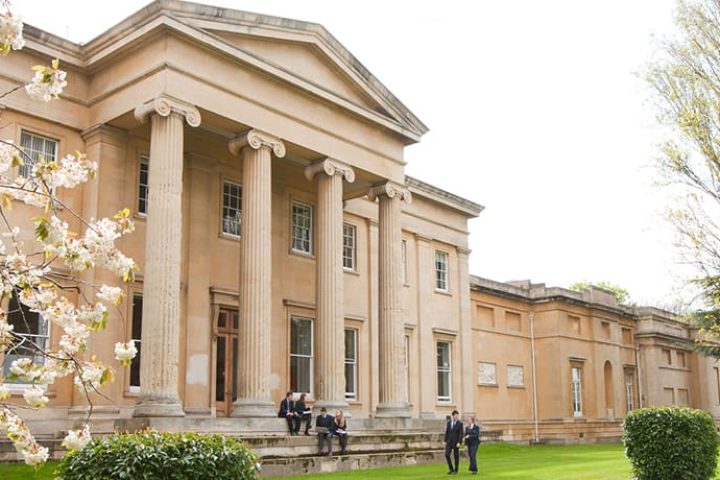
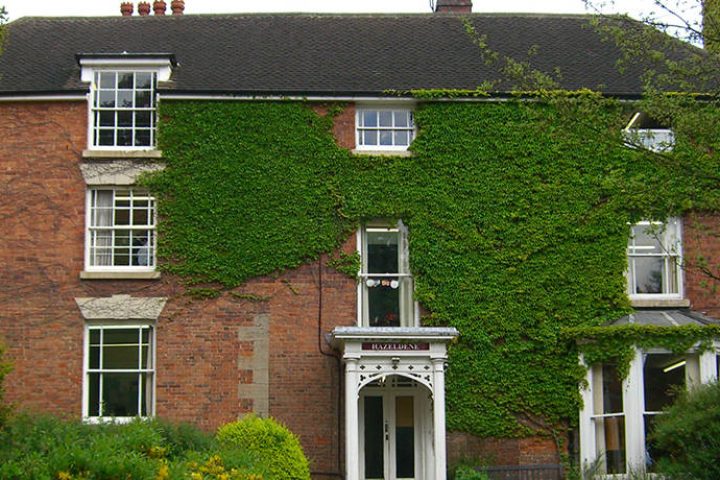
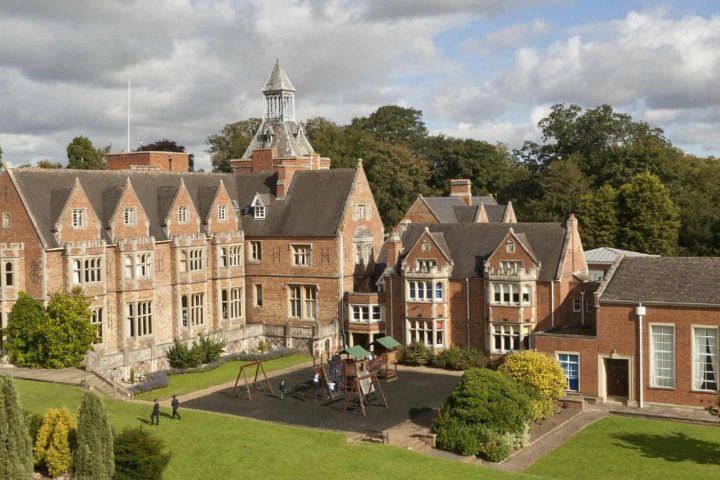
UK preparatory schools (Prep Schools) typically cover eight years, from Year 1 to Year 8. The school entry age in the UK is one year earlier than in Hong Kong, with students starting Year 1 at age 5, compared to age 6 for Primary 1 in Hong Kong. Similar to Hong Kong’s Primary 6 assessment system, Year 6 students sit the SATs (Standard Assessment Tests), the results of which can influence secondary school placement, particularly for entry into highly competitive leading independent schools.

UK Secondary School
UK secondary education spans seven years and is divided into three key stages.
Year 7 - 9
form an exploratory phase, during which students study a broad range of core subjects in preparation for GCSE subject selection.
Year 10 - 11
comprise the GCSE programme, broadly equivalent to Hong Kong’s former HKCEE, with students typically taking 8 - 9 GCSE subjects.
Year 12 - 13
students begin the A‑Level programme, comparable to Hong Kong’s former HKALE, and usually study 3 - 4 A‑Level subjects.
When planning to study in the UK, Hong Kong students must understand:
- UK education system
- GCSE and A‑Level requirements
- Subject selection strategies, and optimal entry points
in order to develop the most effective UK study plan
UK Secondary School Type
Independent School
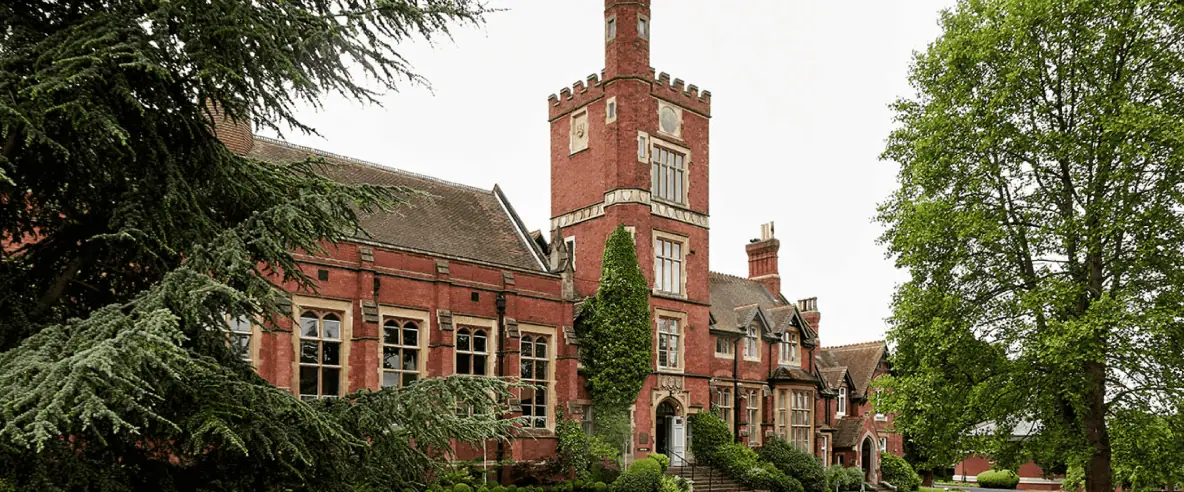
UK independent schools are comparable to Hong Kong’s Direct Subsidy Scheme (DSS) and private schools, as they charge tuition fees and operate independently. As a result, they typically enjoy richer resources. UK independent schools are broadly divided into two main categories: Day schools and Boarding schools
Day Schools
- Students return home each day after school
- Suitable for students already based in the UK or living with family
- More affordable than boarding schools, with annual fees of approximately £20,000 - £35,000
Boarding Schools
- On‑campus boarding with a safe, supportive residential environment
- All‑inclusive annual fees typically range from £35,000 - £55,000, with top schools such as Eton College and Harrow School charging up to £60,000
- Ideal for Hong Kong students studying independently in the UK, boarding schools offer full pastoral and academic support, structured weekends, and complete immersion in British school life and culture

Sixth Form College
Institutions specialising in the Year 12 – 13 A‑Level programme are renowned for their intensive teaching and outstanding academic results. Colleges such as Cardiff Sixth Form College and Oxford International College have consistently ranked among the top performers in the UK A‑Level league tables
- A* - A grade accounts for up to 80% - 95% of results
- Annual fees, including tuition and boarding, typically range from £60,000 - £70,000
- Small‑class teaching, personalised academic support, and dedicated Oxbridge preparation are provided
- Suitable for Hong Kong students aiming for admission to top universities such as Oxford, Cambridge, and Imperial College London

State School
UK state schools provide free education for students aged 5 – 16. While tuition fees are covered, parents are still responsible for certain costs such as school uniforms and stationery. Other expenses, including textbooks, learning materials, and examination fees, are typically covered by the schools.
- Certain state schools provide boarding facilities
- Tuition fees are fully covered; however, parents are required to pay for boarding and accommodation costs
- Many schools receive “Outstanding” ratings in Ofsted inspection reports, particularly for their facilities, pastoral care, and quality of teaching

Grammar School
UK grammar schools are elite institutions within the state school system. They are government ‑ funded and tuition ‑ free, but admission is highly competitive, as students must pass the 11+ or 13+ entrance examinations to gain entry.
- Outstanding academic performance, with A* - A grade at A‑Level typically accounts for 50% - 70% of results
- A higher proportion of students progress to Oxford, Cambridge, and Russell Group universities than in standard state schools
- Grammar schools operate only in certain areas of England and Northern Ireland, with most prioritising applicants within their catchment areas
UK Entrance Exam
UKiset
UK Independent Schools Entry Test
UKiset (UK Independent Schools Entry Test) is an entrance assessment for UK independent schools, designed specifically for non‑native English‑speaking international students aged 9 – 18. The test evaluates English proficiency — including grammar, vocabulary, reading, listening, and writing — as well as mathematical reasoning and non‑verbal reasoning skills. More than 300 UK independent schools accept UKiset results as part of their admissions process, including leading boarding schools such as Wycombe Abbey and Cheltenham Ladies’ College. Hong Kong students can sit the UKiset in Hong Kong, with results valid for one year and applicable to multiple school applications, helping to reduce the time and travel costs associated with sitting individual school entrance examinations.
CAT4
Cognitive Abilities Test Fourth Edition
CAT4 (Cognitive Abilities Test, Fourth Edition) is a widely used cognitive assessment in UK secondary schools. It evaluates students’ underlying cognitive abilities — rather than subject knowledge — across four key areas:
- Verbal Reasoning
- Quantitative Reasoning
- Non‑Verbal Reasoning
- Spatial Reasoning
Many UK independent schools and state grammar schools use CAT4 for admissions assessment or ability grouping. Results are reported as stanine scores (1 – 9) or Standard Age Scores (SAS, with an average of 100), helping schools identify students’ academic potential and provide appropriate support tailored to different learning needs.
ISEB
Independent Schools Examinations Board
The ISEB (Independent Schools Examinations Board) is the UK authority responsible for standardised entrance assessments for independent schools, including
- ISEB Common Pre‑Test (11+ pre‑test)
- ISEB Common Entrance Examination (13+ entrance examination)
The Common Pre‑Test is an online assessment for Year 6 students (ages 10 – 11), covering English, Mathematics, Verbal and Non‑Verbal Reasoning. The Common Entrance Examination is taken in Year 8 (ages 12 – 13) and assesses subjects such as English, Mathematics, Science, and Humanities. Many prestigious schools, including Eton College, Harrow School, and Winchester College, require ISEB results as part of their admissions process.
UK University
UK undergraduate degree programmes typically last three years, the same as Hong Kong’s university system prior to education reform. From the first year of study, students focus on a single major or a joint honours programme, covering the core theories and foundational knowledge of their chosen discipline. Students are also expected to adapt to the UK’s distinctive teaching approach, which includes lectures, seminars, and tutorials.
First ‑ year assessment methods combine coursework, academic essays, group presentations, and written examinations.
Extended Reading:
- Article
- Article
Pathways to UK Universities
Hong Kong students can apply to UK universities through various pathways, depending on their academic background and stage of study.
The following are the main routes to progression:
1
Direct Entry to Undergraduate Programmes via HKDSE
Entry Pathway
- DSE
- Bachelor’s Degree
- Master’s Degree
- ︎Top UK universities require HKDSE results of 544 to 5*55 (depending on the University and Subject)
- Top universities (such as Durham University) require a grade of 5* or above
- For competitive programmes such as Medicine or Law, applicants are required to sit additional admissions tests, such as UCAT or LNAT
2
UK International Foundation Year Programme
Entry Pathway
- Foundation Programme
- Bachelor’s Degree
- Master’s Degree
- Students whose HKDSE, IB, or A‑Level results do not meet the direct entry requirements for undergraduate study, or whose academic background does not align with their intended subject
- Foundation programmes typically last six months to one year. Students who achieve the required results may progress to Year 1 of a bachelor’s degree
- Form 5 students may apply to foundation programmes using their school‑based academic results
3
International Year One
Entry Pathway
- International Year One Programme
- Bachelor’s Degree (Year 2)
- Master’s Degree
- Students whose HKDSE, IB, or A‑Level results do not meet the direct entry requirements for undergraduate study, but who demonstrate a strong academic foundation
- Students who achieve the required results will progress directly to Year 2 of a bachelor’s degree
4
International Curriculum (IB / A‑Level)
Entry Pathway
- IB / A Level
- Bachelor’s Degree
- Master’s Degree
- For top universities, typical entry requirements range from 34 – 42 points (out of a maximum of 45), with some programmes requiring specific subjects at grade 6 or 7 (out of 7) ︎
- Entry requirements for leading universities generally range from A*AA to AAB, depending on the university and chosen subject
5
Top‑Up Degree Programme
- Top ‑ up degree programmes are designed specifically for sub ‑ degree graduates, providing a pathway to obtain a bachelor’s degree. These programmes typically follow a “2+2” structure, allowing students who have completed two years of an associate degree or higher diploma to enter directly into the later years of a degree programme (usually Year 2)
- In most cases, students can graduate after a further two years of study. Admissions decisions are based on applicants’ academic performance (GPA) and the relevance of their prior studies to the chosen degree programme. Students and parents are advised to consult an education advisor for personalised guidance on suitable top ‑ up degree options
Undergraduate Year 1
- Students who have completed public examinations may apply through UCAS
- UK bachelor’s degree programmes are typically three years in duration
- Entry Requirements (vary by programme):
- HKDSE: 332 - 5*5*5
- IB: 28 - 45 points
- A-Level: A*A*A* - CCC
- IELTS: Overall score of 6.0 - 7.5, with individual components typically no lower than 6.0 - 7.0
- Portfolio submission may be required for subjects such as Art & Design and Architecture
- Interviews are required by some universities and programmes
- Medicine and Dentistry applicants must sit the UCAT admissions test
- Law applicants at some universities are required to take the LNAT
Universities Recommnedation
Foundation
- Available in both one to one and one to many foundation programmes
- Form 5 students may apply using their school‑based academic results
- Programme duration is approximately 8 months, with progression to Year 1 of a bachelor’s degree upon successful completion
- Entry Requirements (vary by programme) :
- Form 5 school results: 55% - 65%
- HKDSE: 222 to 333
- IB: 18 - 24 points
- A-Level: DDD
- IELTS: Overall score of 5.0 - 5.5, with individual components typically no lower than 4.5 - 5.0
Universities Recommendation
International Year One
- Open to students who have completed public examinations
- Programme duration is approximately 8 months
- Availability depends on whether the university offers an International Year One programme
- Successful completion allows progression directly to Year 2 of a bachelor’s degree
- Entry Requirements (vary by programme) :
- HKDSE: 332 - 433
- IB: 22 - 29 points
- A-Level: BCC - CCD
- IELTS: Overall score of 5.5 - 6.5, with individual components typically no lower than 5.5 - 6.0
Universities Recommnedation
UK Master’s Degree / Pre‑Master’s Programme
- Open to students who have completed a bachelor’s degree
- UK master’s programmes typically last one year. Students whose undergraduate results do not meet the direct entry requirements may apply for a one year Pre ‑ Master’s programme instead
- Entry Requirements (vary by programme) :
- UK 2:1 equivalent undergraduate degree (approximately 60% - 69% GPA, depending on the institution)
- IELTS: Overall score of 6.5 - 7.0, with individual components typically no lower than 6.0 - 6.5
Top‑Up Degree Programmes
Top ‑ up degree programmes allow Hong Kong associate degree or higher diploma graduates to enter Year 2 or Year 3 of a UK undergraduate degree, with the opportunity to obtain a UK bachelor’s degree in as little as two years.
UK universities generally recognise Hong Kong sub‑degree qualifications. The level of entry granted depends on the student’s academic results, the relevance of prior studies, and the admissions requirements of individual universities.
UK University Admissions Tests
Some leading UK universities and highly competitive programmes — such as Medicine, Law, and Engineering — require applicants to sit additional admissions tests. Common examples include:
- UCAT
- BMAT
- LNAT
- MAT
Hong Kong students should check admissions test requirements carefully and sit the relevant tests between September and October, as results are used for shortlisting and final decisions
Estimated Cost of Studying Abroad
Estimated Costs | Indicative annual costs (GBP)* | ||||||||||||||||||||||||||||||||||||||||||||||||||||||||||||||||||||||||||||||||||||||||||||||||||
|---|---|---|---|---|---|---|---|---|---|---|---|---|---|---|---|---|---|---|---|---|---|---|---|---|---|---|---|---|---|---|---|---|---|---|---|---|---|---|---|---|---|---|---|---|---|---|---|---|---|---|---|---|---|---|---|---|---|---|---|---|---|---|---|---|---|---|---|---|---|---|---|---|---|---|---|---|---|---|---|---|---|---|---|---|---|---|---|---|---|---|---|---|---|---|---|---|---|---|---|
Postgraduate programmes
| £13,500 – 50,000
| ||||||||||||||||||||||||||||||||||||||||||||||||||||||||||||||||||||||||||||||||||||||||||||||||||
Undergraduate programmes | £13,000 – 43,000 | ||||||||||||||||||||||||||||||||||||||||||||||||||||||||||||||||||||||||||||||||||||||||||||||||||
Foundation/International Year One | £10,000 – 25,000 | ||||||||||||||||||||||||||||||||||||||||||||||||||||||||||||||||||||||||||||||||||||||||||||||||||
Vocational programmes | £6,000 – 12,000 | ||||||||||||||||||||||||||||||||||||||||||||||||||||||||||||||||||||||||||||||||||||||||||||||||||
Boarding school fees (per term) | £10,000 – 25,000
| ||||||||||||||||||||||||||||||||||||||||||||||||||||||||||||||||||||||||||||||||||||||||||||||||||
Accommodation | £5,000 – 15,200 | ||||||||||||||||||||||||||||||||||||||||||||||||||||||||||||||||||||||||||||||||||||||||||||||||||
Living expenses (food, transport, leisure) | £6,000 – 10,000 | ||||||||||||||||||||||||||||||||||||||||||||||||||||||||||||||||||||||||||||||||||||||||||||||||||
others expense | |||||||||||||||||||||||||||||||||||||||||||||||||||||||||||||||||||||||||||||||||||||||||||||||||||
UK Student Visa | £524 | ||||||||||||||||||||||||||||||||||||||||||||||||||||||||||||||||||||||||||||||||||||||||||||||||||
UK Immigration Health Surcharge (IHS) | £776 – 1035 | ||||||||||||||||||||||||||||||||||||||||||||||||||||||||||||||||||||||||||||||||||||||||||||||||||
*The above fees are subject to change and are for reference purposes only.
Your time is now! Kickstart your UK education journey today!
Unleash the full potential of your academic journey as our expert consultants provide comprehensive guidance, propelling you towards remarkable achievements with the UK institution of your choice.